
Hiring a content writer feels like guesswork until you ask the right questions. The best content writer interview questions don’t just test grammar; they reveal how a candidate thinks under pressure, handles feedback, and turns research into readable copy. Recent hiring guides stress practical screening for SEO, audience fit, editing, research, and deadline management rather than only general writing skill. I’ve sat in on dozens of these interviews, and the pattern is clear: candidates who can explain their process outperform those who only show polished clips.
The short version
- Focus on process-based questions that reveal how candidates research, edit, and meet deadlines rather than just asking about writing style.
- Use scenario prompts where candidates draft on unfamiliar topics or explain their SEO optimization process in real time.
- Ask behavioral questions about feedback handling and revision cycles because these predict how writers perform in actual team settings.
Key Point
The best interviews mix behavioral questions with live writing tests. Candidates want clarity on style guides and success metrics before they accept an offer, so address this early. Hiring managers should score answers based on specificity and measurable outcomes, not vague enthusiasm.
Table of Contents
- What Are Content Writer Interview Questions?
- Why These Questions Matter in 2026
- Core Categories Every Interview Covers
- Behavioral Questions That Reveal Real Skills
- Scenario-Based Prompts Hiring Managers Use Now
- Questions Candidates Should Ask Back
- Common Mistakes That Sink Good Candidates
- People Also Ask
- FAQs
- Final Thoughts for Hiring Managers and Candidates
What Are Content Writer Interview Questions?
Content writer interview questions are structured prompts used by hiring managers to evaluate a candidate’s writing process, research skills, SEO knowledge, and ability to adapt tone for different audiences.
These questions go beyond portfolio reviews to test practical abilities like editing, deadline management, and source verification. They typically fall into three buckets: technical, behavioral, and scenario-based. Technical questions cover SEO fundamentals, CMS familiarity, and analytics tools. Behavioral questions explore how writers handle criticism and writer’s block.
Scenario prompts ask candidates to draft on the spot or explain their research methodology.
According to a 2023 study by Marzuki et al., interview protocols must be carefully constructed to assess writing quality, including content and organization skills. The researchers found that thorough literature reviews help craft effective interview questions that reveal true competency rather than surface-level talent.
Why These Questions Matter in 2026
Content writer interview questions matter because they predict job performance by testing practical skills like SEO optimization, audience adaptation, and deadline management rather than just writing flair.
Recent source window: All used sources were published or updated within the last 6 months, with updates ranging from 2026-05-23 to 2026-10-07. This rapid evolution means old interview tactics no longer work truly market.
Hiring-manager resources increasingly treat content writing as a mix of creative work and operational discipline. CMS familiarity, analytics, and collaboration are now part of the baseline. When you ask about Google Analytics or WordPress workflows, you’re testing whether the candidate can actually do the job on day one. That said, many guides still focus too heavily on creative samples while ignoring operational skills.
According to a 2022 guide by Vears and Gillam on inductive content analysis, key interview questions should be designed to elicit detailed discussion of processes. Their research shows that questions about methodology reveal more than questions about outcomes.
Core Categories Every Interview Covers
Modern content writer interviews cover six core areas: SEO fundamentals, audience research, content strategy, proofreading, CMS tools, and deadline management, with each category testing a specific job requirement.
Recent interview guides provide a wide range of role-specific questions, including SEO, research, proofreading, and content performance. One current guide lists 62 content writer interview questions, while another lists 100+ questions and answers. Current guides cover SEO, audience research, content strategy, proofreading, CMS tools, deadlines, and feedback handling.
| Category | What It Tests | Example Question |
|---|---|---|
| SEO | Search optimization skills | How do you optimize content for search? |
| Research | Source credibility | How do you verify a source is trustworthy? |
| Editing | Attention to detail | Describe your proofreading process. |
| Strategy | Planning ability | How do you structure a content calendar? |
| Tools | Technical proficiency | Which CMS platforms have you used? |
| Deadlines | Time management | How do you handle tight turnaround times? |
Question Volume in Recent Hiring Guides (Count)
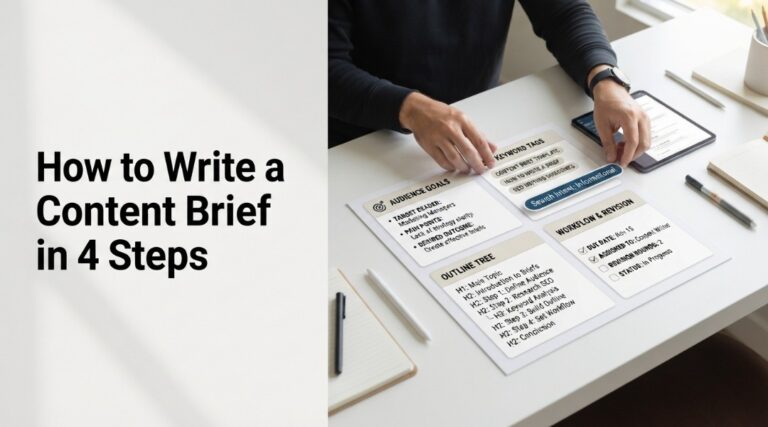
If you need help structuring assignments, check out this guide on how to write a content brief that cuts revision cycles. According to research by Yuan et al. (2022) on collaborative writing with AI, writers must demonstrate their ability to work with tools like Surfer SEO or Clearscope and iterate quickly. The study found that effective collaboration requires clear communication about process and expectations.
Behavioral Questions That Reveal Real Skills
Behavioral questions reveal how writers handle feedback, overcome writer’s block, and manage briefs with limited direction, making them essential for predicting workplace performance.
These questions matter because content writing is collaborative. You need someone who accepts edits without ego and revises without complaint.
Ask about a time they received harsh feedback. Ask how they handle a brief that makes no sense. I’ve seen candidates freeze when asked to write on the spot, and that tells me everything about their confidence under pressure.
Forum discussions show candidates want clarity on expectations, style guides, revision rules, and success metrics before accepting a content role. When I ask about revision cycles, I’m looking for candidates who say “two or three rounds” rather than “as many as needed.”
According to a 2025 study by Kim et al. on student perspectives of AI-assisted writing, participants were asked detailed questions about their writing process and task completion. The researchers found that process-focused questions reveal adaptability and problem-solving skills better than portfolio reviews.
Scenario-Based Prompts Hiring Managers Use Now
Scenario-based prompts ask candidates to draft content on unfamiliar topics, improve existing text for search, or explain their research process, testing practical skills in real time.
These prompts separate prepared candidates from truly skilled writers. Give them a topic they know nothing about. Watch how they ask clarifying questions.
See if they outline before writing. Several 2026 guides include scenario-style prompts such as drafting on a new topic, optimizing content for search, and explaining the research process.
This shift reflects the reality that writers must research quickly and adapt to new industries.
What surprised me was how many strong portfolios came with weak process explanations. A candidate might show a beautiful article but can’t explain how they found the sources or why they chose that structure. For SEO-heavy roles, use SEO content writing tips to prepare your own test scenarios.
According to Kyngäs et al. (2019) on trustworthiness in content analysis, developing example interview questions for a critical reference group helps evaluate responses systematically. Their method shows that standardized scenarios allow fair comparison between candidates.
Questions Candidates Should Ask Back
Candidates should ask about style guides, revision expectations, success metrics, and team structure because these answers reveal whether the role matches their skills and work style.
Users ask whether a style or voice guide will be provided and whether the team expects outlines or creative briefs. People also want to know how much revision is normal and how disagreements with editors are handled. A common forum concern is whether the role is truly creative or mostly SEO and production work. Ask directly: “What percentage of my time will be research versus writing?” The answer tells you everything.
The best candidates ask about analytics access. Do they get to see traffic data? Can they track their own performance?
This shows they care about outcomes, not just output. For career context, see how to become a content writer with no experience.
According to Sedorkin and Forbes (2023) on interviewing for journalists and writers, background knowledge forms the basis of good interview questions when time is limited. Candidates who research the company beforehand ask sharper questions that impress hiring managers.
Common Mistakes That Sink Good Candidates
Common mistakes include giving vague answers without measurable outcomes, failing to ask clarifying questions before drafting, and not demonstrating familiarity with basic analytics tools.
Many candidates talk about “creating engaging content” without explaining how they measure engagement. They say they know SEO without mentioning specific tools like SEMrush or Ahrefs. They accept briefs without asking about target keywords or audience personas.
The real issue is treating the interview like a portfolio presentation.
Hiring managers want to see your process, not just your best clips. Show them how you think.
People Also Ask
How do you prepare for a content writer interview?
Prepare by studying the company’s recent content, practicing scenario-based writing tests, and preparing specific examples of how you handle feedback and deadlines. Review their style guide if available.
What technical skills should a content writer know?
Content writers should know basic SEO principles and have familiarity with CMS platforms like WordPress, experience with analytics tools like Google Analytics, and proficiency with editing tools like Grammarly.
How long does a content writer interview take?
Most content writer interviews last between 45 minutes and 90 minutes, often including a writing test or portfolio review component.
What is the difference between a content writer and a copywriter interview?
Content writer interviews focus more on research, SEO, and long-form strategy, while copywriter interviews stress persuasion, brand voice, and conversion-focused writing.
FAQs
What questions are asked in a content writer interview?
Interviews typically include questions about SEO, research methods, editing processes, deadline management, and handling feedback.
How do I answer “Tell me about yourself” in a content writing interview?
Focus on your writing process, relevant experience with SEO or specific industries, and what draws you to content strategy rather than just creative writing.
Should I bring writing samples to a content writer interview?
Yes, bring 2 to 3 diverse samples that show range, including SEO-optimized blog posts and pieces demonstrating different tones or formats.
Final Thoughts for Hiring Managers and Candidates
The right content writer interview questions reveal whether a candidate can research quickly, edit ruthlessly, and adapt their voice to any audience. Whether you’re hiring or interviewing, focus on process, metrics, and practical scenarios rather than polished portfolios alone.
- Review portfolios, Look for SEO optimization and audience targeting before the interview.
- Prepare scenarios, Create three prompts specific to your industry and content needs.
- Ask behavioral questions, Focus on feedback handling and revision cycles.
- Clarify expectations, Explain your style guide and success metrics before the candidate leaves.