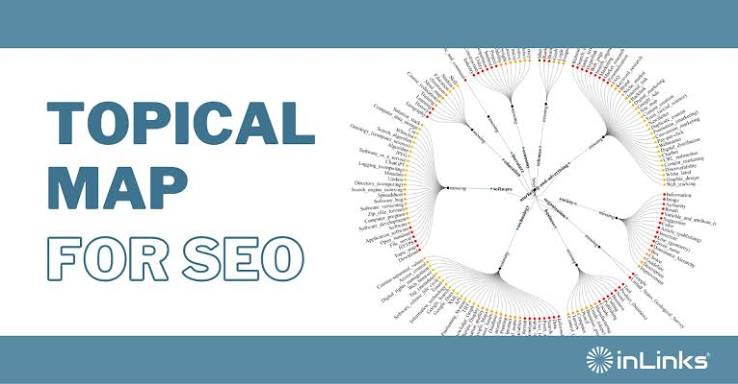

Content teams waste months publishing articles that never rank. Not mostly because the writing is subpar. Because there’s no structure connecting those pages. Learning how to complete a topical map seo fixes this by organizing your content into a logical hierarchy that search engines can actually wrap their heads around.
On closer inspection, mostly, the result is better topical coverage, cleaner internal linking, and far less keyword cannibalization.
- A topical map groups your main subject into pillar pages, supporting topics, and subtopics so you cover everything logically and completely.
- Start by defining your core focus, researching keywords, building a hierarchy, then assign one primary intent per page to prevent cannibalization.
- Internal links between pages reinforce semantic relationships and help search engines recognize your topical authority.
Key Point
- Define your core focus first before touching any keyword tool
- One page gets one primary keyword and one intent, period
- Internal linking reinforces the entire structure; without it, you just have isolated pages that nobody finds
Table of Contents
- What is a Topical Map in SEO?
- Step 1: Define Your Core Focus and Scope
- Step 2: Research and Build Your Topic Hierarchy
- Step 3: Assign Page Roles and Internal Links
- Common Mistakes, FAQs, and Next Steps
What is a Topical Map in SEO?

A topical map for SEO is a structured content plan that groups your site’s main subject into related subtopics and supporting pages. It helps you cover a topic completely and logically instead of publishing random articles that don’t connect. It’s like a plan of your entire content network.
The concept borrows from physical mapping. According to a 2024 study by Harlis and Seo on blue-green infrastructure in Surabaya, topographic maps identify promising nodes by analyzing terrain, road networks, and soil types together. Your topical map does the same thing, and you identify content nodes by analyzing keyword relationships, search intent, and competitor gaps at the same time.
In the same way, according to research published in Frontiers in Psychiatry by Kim et al. in 2023, topographical mapping in brain research reveals how different regions connect through precise frequency bands. The parallel is clear: your topical map reveals how content pieces connect through semantic relationships.
What You’ll Need Before You Start
Gather a few essentials first. You need a keyword research tool like Ahrefs, SEMrush, or even Google Keyword Planner for free access. Your mileage may vary, of course. Grab a spreadsheet template (Google Sheets works fine).
Set aside about 4 to 6 hours of focused time for a mid-sized site, and you need a clear understanding of your business goals. Mapping without business context just crafts bloated content. This detail matters more than it might seem right now.
How does topical mapping work in practice?
It works by moving from broad pillar topics down to supporting topics and then to specific subtopics. You start with one big concept, break it into smaller pieces, and assign each piece its own page. Internal links connect everything so search engines can follow the relationships.
Step 1: Define Your Core Focus and Scope
Your first step is defining what your site is about as precisely as possible. Ahrefs asks: “What’s your site’s core focus as precisely as possible?” This isn’t a vague exercise. You need to finalize what your brand wants to be known for and where the boundaries of your business scope end.
In my go-through, this step takes longer than most of us expect. So “We help local dental practices get more patients through Google” is precise. That precision decides everything downstream.
According to a 2020 local SEO guide by Gaurav Tiwari, SEO success comes down to doing many small things reliably, and that starts with knowing exactly what you’re targeting. As it turns out, if your focus is muddy, your topic map will be muddy too.
What’s the catch with defining too broadly?
When you define your scope too widely, you end up with topics that score poorly on brand relevance and business would-be. Ahrefs recommends scoring topics by brand relevance, business possible, total volume, and traffic would-be. Remove any topic that scores poorly on at least two of those factors, and that filter keeps your map tight and practical.
Actually, let me correct that. The scoring isn’t just about removing awful topics. It’s about prioritizing the great ones, so you know what to publish first.
Step 2: Research and Build Your Topic Hierarchy
Start your research with practical workflows that include keyword research, competitor SERP review, People Also Ask expansion, Google autocomplete, related topics, and content brief creation. These inputs give you the raw material you need to complete a topical map seo, building your hierarchy from pillar topics down to specific subtopics.
Now, according to a 2024 study by R. Macumber on AI and SEO, AI-powered materials are changing how e-commerce sites approach content strategy. That’s relevant here mainly because AI-assisted clustering of the stuff you need can generate topic ideas rapidly. But everyone often complains that AI suggestions are too broad or repetitive. You still need manual cleanup.
Here’s what your research toolkit should include
- Keyword research tools like Ahrefs or SEMrush for volume and difficulty data.
- Google autocomplete and related searches for discovering what people actually type.
- People Also Ask boxes for question-based subtopics that reveal real searcher intent.
- Competitor content categories for spotting gaps you can fill.
- Whiteboards or topic wheels for visual brainstorming when you need to step away from the spreadsheet.
Topic Hierarchy Depth (Typical Mid-Sized Site)
Which tools work best for topical map research?
The best combination is a premium keyword tool plus free inputs from Google. A YouTube tutorial on topical mapping recommends using a premium SEO tool for keyword research, and that’s solid advice. But don’t ignore Google autocomplete, and People Also Ask, and those free sources reveal what searchers actually type, which keyword materials sometimes miss.
Step 3: Assign Page Roles and Internal Links

Every page in your topical map needs a clear role. Assign each page as either a pillar page, a supporting page, or an existing page that gets mapped into the structure. One page gets one primary keyword and one main intent. This prevents keyword cannibalization, which is the single biggest performance killer in topical mapping.
According to a 2021 study by Soltani et al. published in Current Opinion in Behavioral Sciences, cortical topography maps hierarchical levels in the brain. Where higher levels process more complex information.
Your pillar pages work the same way, so they sit at the top, processing the broad concept. While supporting pages underneath handle the specifics.
In the same way, according to research by Park et al. from 2023 on digital twins and land management, inconsistencies between different map types cause real problems in land management. In SEO, inconsistencies between page intent and assigned keywords cause the same kind of confusion for search engines.
Here’s the thing – inLinks describes topical mapping as a topic and sub-topic hierarchy that mirrors how search engines figure out related concepts. Internal links reinforce those relationships.
How do you prevent keyword cannibalization?
You prevent it by assigning one main keyword per page and making sure supporting pages link up to the pillar rather than competing with it. You can avoid keyword cannibalization by using one main keyword per page. That’s your rule, no exceptions.
Common Mistakes, FAQs, and Next Steps
The most typical error when learning how to complete a topical map seo is letting the map grow too large without business goals constraining it. Teams add loosely related subtopics, the map bloats, and execution stalls. A topical map is only a plan. It creates zero authority unless you actually publish, link, and maintain those pages.
Here are the most common mistakes I see:
- Adding 60 subtopics when 20 would cover the space, just because the keyword tool suggested them
- Skipping internal links because the CMS makes it clunky (which kills the semantic structure)
- Writing pillar pages as thin overviews instead of thorough guides
- Not filtering topics through business potential, which leads to traffic that never converts
- Ignoring page intent overlap, so two articles cannibalize each other in the SERPs
People Also Ask
A topical map is a structured content plan that organizes your site’s main subject into pillar pages, supporting topics, and distinct subtopics. Helping search engines understand your topical authority by showing clear relationships between pages through hierarchy and internal links.
For a mid-sized site, expect about 4 to 6 hours of focused work to build the map itself. That includes keyword research, competitor analysis, and hierarchy planning. Content production takes much longer, depending on how a lot of pages you need to publish.
Yes. It works on local SEO; topic maps are especially useful. When they include location-based subtopics and service variations. Local topic maps help you cover geographic modifiers and service types without crafting duplicate pages that compete with each other in the SERPs.
AI platforms can generate topic ideas quickly, but the majority time. After some time report that AI suggestions need heavy cleanup seeing as many are too broad or repetitive. Use AI for brainstorming, then manually validate every suggestion for relevance and business would-be.
What to Do Next
- Write your core focus, Summarize what your site covers in one precise sentence before opening any keyword tool.
- Research 3 to 5 pillar topics, Use Ahrefs or SEMrush plus Google autocomplete and People Also Ask to gather raw ideas.
- Score each topic, Filter by brand relevance, business potential, volume, and traffic potential. Drop anything scoring low on two or more factors.
- Assign one primary keyword per page, Map internal links from supporting pages up to pillar pages before publishing.
In practical terms, now you know how to complete a topical map seo; start small. Select one pillar topic, build 5 supporting pages, and interlink them properly. Measure the results over 90 days. Then expand.