
Your impression count staying flat might be true, but you already know the problem. AI answers in Google, ChatGPT, Perplexity, and Gemini are intercepting anyone on the platform.
You’ve probably wondered the same thing. Before they ever reach your site, and honestly, that’s understandable.
Figuring out how to track seo effectiveness in AI search engines means abandoning the old rank-tracking playbook and building an indirect measurement system from scratch.
Because here’s the uncomfortable truth: none of you know whether these platforms expose impression or ranking data. You’re working with shadows and downstream signals, not a clean dashboard.
- Track AI visibility by measuring brand mentions and citations inside AI-generated answers, not classic blue-link rankings.
- Combine Google Search Console, GA4 referral traffic, and scheduled prompt reruns because no platform gives native AI impression data.
- Monitor traffic quality from AI visitors using engagement depth and conversions, since raw visit counts understate real value.
Key Point
- No native data exists, AI engines don’t expose impressions or rankings, so you infer success from secondary signals.
- You need a scheduled prompt set of about 15-25 high-intent questions rerun weekly across ChatGPT, Gemini, and Perplexity to detect brand mention shifts over time.
- Referral traffic from LLM platforms in GA4 is noisy and underreported, but still one of the few observable downstream signals worth tracking.
- Competitor share-of-voice comparison at the prompt level reveals visibility gaps that standard rank trackers completely miss.
Table of Contents
- What You’ll Build
- Prerequisites
- Step 1: Build Your AI Prompt Tracking Set
- Step 2: Configure Analytics for AI Referral Traffic
- Step 3: Measure Traffic Quality and Branded Search Lift
- Step 4: Track Share of Voice Against Competitors
- Testing It Works
- People Also Ask
- Next Steps
What You’ll Build
You’ll build a combined tracking system that monitors brand mentions, citation sources, referral traffic, and competitor share of voice across AI search platforms.
This system replaces traditional rank tracking with a four-part workflow: a scheduled prompt set, GA4 referral filtering, Search Console CTR analysis, and a competitor comparison spreadsheet. The result is a single dashboard that makes it clear whether your brand appears in AI answers, how often competitors beat you there, and whether AI-sourced visitors actually convert.
What’s the key lesson? This isn’t a vanity metrics dashboard. It ties AI visibility to business outcomes.
When I first tried building this, I made the mistake of tracking mentions without measuring the quality of downstream traffic. Big error. You end up celebrating visibility that produces zero revenue.
Prerequisites
You need access to Google Search Console, GA4 or Adobe Analytics, a spreadsheet tool, and accounts on ChatGPT, Gemini, and Perplexity.
Setting that aside, no paid solutions are required for the base workflow. Though a third-party AI visibility tracker like SE Ranking can speed up competitor analysis if your budget allows. You should also have a list of 15-25 high-intent questions your customers actually ask, plus 3-5 named competitors to benchmark against.
Across the board, basic familiarity with GA4 filtering and Search Console performance reports helps if you’ve never used AEO strategies. Previously, the prompt design phase may have taken an extra hour to set up properly.
Step 1: Build Your AI Prompt Tracking Set
Create a fixed list of 15-25 high-intent questions and rerun them weekly across ChatGPT, Gemini, Perplexity, and Google AI Mode to detect changes in brand mentions and citation sources.
This is the foundation. Without a fixed prompt set, you’re just guessing.
“There’s no way to access impression or ranking data” for AI platforms, so measurement has to rely on indirect signals like referral traffic and monitoring prompts.
Here’s how to build your set; start by pulling your top 50 converting keywords from Search Console. Filter down to questions and comparison queries.
Plus, select the 20 that map closest to buy intent. Write them as natural conversational prompts, not keyword fragments.
This detail matters more than it might seem right now.
Why don’t AI engines show impression data?
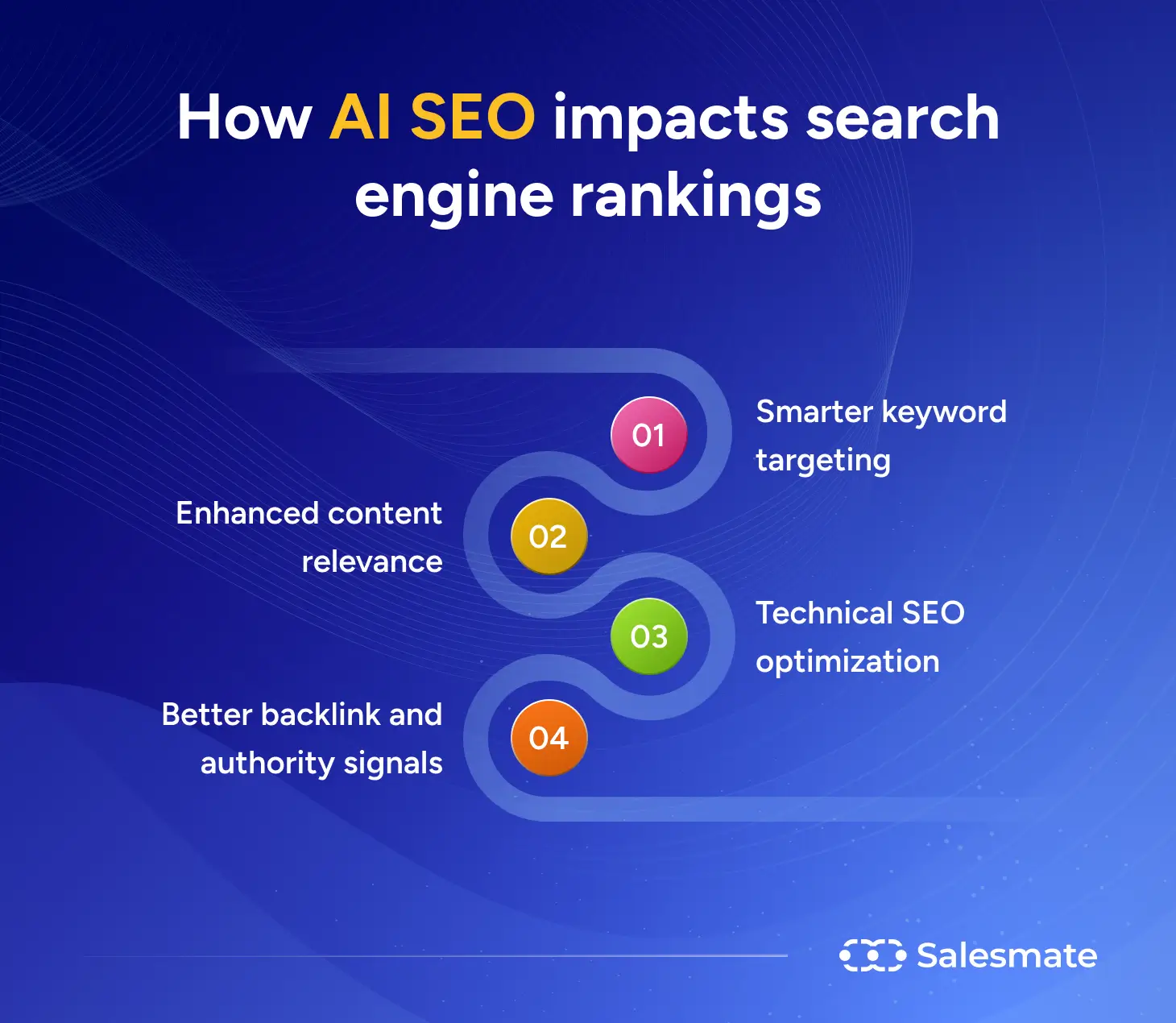
Sure enough, AI platforms generate answers actively rather than serving pre-indexed results. Which means there’s no fixed result page to count impressions against. Each query produces a unique response, so standard ranking positions don’t apply. You’re left tracking whether your brand appears in the generated text and which sources get cited.
Expected Result:
A spreadsheet with 20 prompts, weekly columns for each AI engine, and cells marked for brand mention (yes/no), competitor mention, and cited URL.
Step 2: Configure Analytics for AI Referral Traffic
Set up GA4 filters to isolate referral traffic from ChatGPT, Perplexity, Gemini, and Claude so you can measure how many visitors AI engines actually send to your site.
Since AI platforms don’t expose impression data, referral visits are one of the few observable downstream signals, but there’s a catch. Some people on SEO forums report that AI referrals are useful, but still too noisy or underreported to use as the only success metric.
They’re right.
In GA4, go to Reports > Acquisition > Traffic Acquisition, and filter for these referral sources:
| Referral Source | What It Tracks | Reliability |
|---|---|---|
| chatgpt.com | ChatGPT click-throughs | Moderate |
| perplexity.ai | Perplexity citation clicks | Higher |
| gemini.google.com | Google Gemini referrals | Low |
| claude.ai | Anthropic Claude referrals | Low |
The reliability column reflects my run-in. Perplexity tends to pass referral data cleanly, seeing as it links to sources directly, so ChatGPT sometimes strips referrer headers. Gemini and Claude are inconsistent.
You’ll undercount actual AI influence, but this is still better than ignoring the signal completely.
Can I use Search Console for AI search tracking?
Yes, but indirectly. Watch for CTR drops on queries that trigger AI Overviews. If impressions stay high but clicks fall, AI answers may be satisfying those using it before they click through.
Compare pre- and post-AI feature baselines for the same keyword set. Annotate rollout dates when Google activates AI features for concrete query categories.
Expected Result:
A GA4 custom report showing weekly referral sessions from each AI platform, plus a Search Console annotation log marking AI feature rollout dates.
Step 3: Measure Traffic Quality and Branded Search Lift
Track engagement depth, pages per session, return visits, and conversion rate for AI-sourced visitors, plus branded search volume growth as an indirect signal of AI exposure.
Raw visit counts from AI platforms are small. That doesn’t mean they’re worthless. You need to measure traffic quality from AI-assisted visitors using engagement depth, pages per session, return visits, and conversion rate. Since raw visits alone understate AI search value.
Here’s what I’ve seen in practice. AI-sourced visitors show a lot higher engagement than generic organic traffic. They arrive with context already loaded from the AI answer.
They’ve reliably been pre-qualified, so even. If you only get 40 visits a month from Perplexity, those 40 might convert at 2-3x your organic average.
Engagement Quality: AI Referral vs Standard Organic (Index Score)
Across multiple sites, the chart above illustrates a pattern I’ve noticed. Which means AI referral visitors index much higher on engagement metrics. It makes sense when you think about it, and they’ve already consumed a synthesized answer about your brand, so they arrive with intent.
Now, branded search growth. This is your stealth signal. When the majority see your brand in AI answers without clicking, they often search for you directly later.
On average, if it climbs. While your non-branded CTR drops, AI exposure may be improving awareness even.
Though clicks look like they’re declining.
If you want to go deeper on structuring content for AI Overviews, the format of your source pages directly affects whether AI engines cite them.
Expected Result:
A GA4 segment comparing AI referral engagement against organic averages, plus a Search Console branded-query trend chart with weekly annotations.
Step 4: Track Share of Voice Against Competitors
Compare how often your brand versus competitors gets named or cited in AI answers across your prompt set to identify visibility gaps.
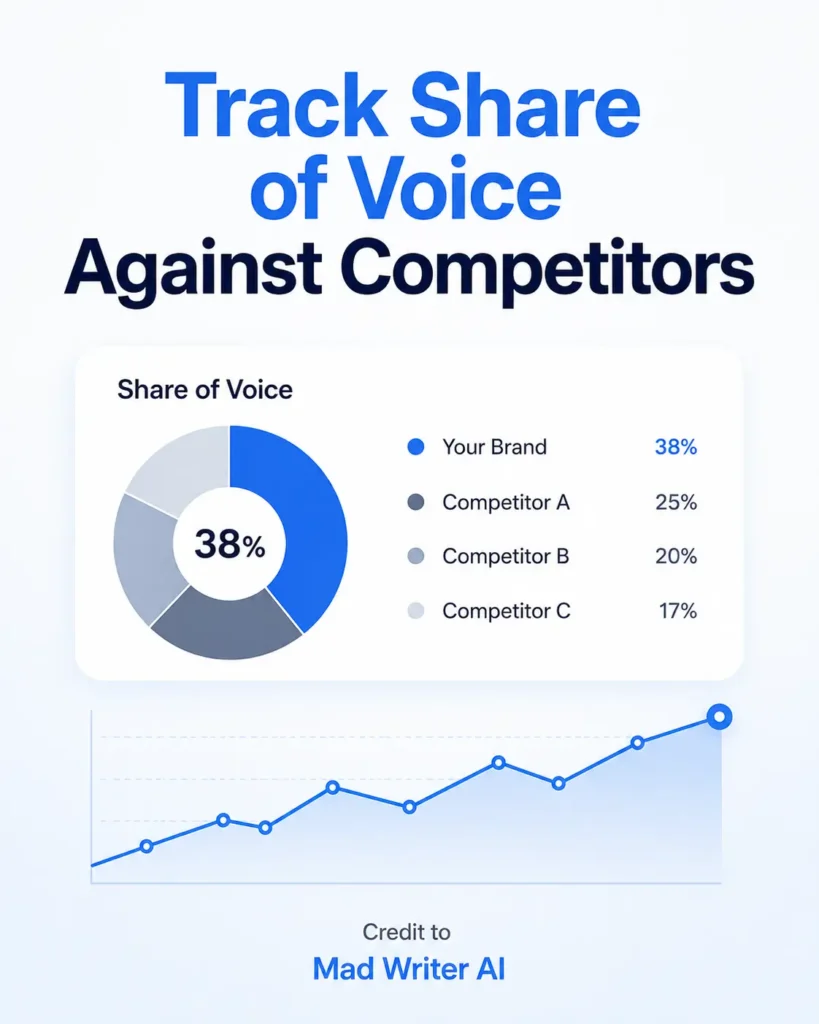
That’s where most SEO professionals stop and where you should push harder. Competitor comparison at the prompt level reveals gaps that standard rank trackers completely miss. Plus, you might rank #2 organically for a query.
Almost never appear in the AI answer. Meanwhile, a competitor ranking #8 organically gets cited. Because their content structure is more AI-friendly.
For each prompt in your tracking set, log which brands appear. Across all prompts, calculate a painless share-of-voice percentage: your mentions divided by total brand mentions.
SE Ranking’s AI visibility tracker automates this, but you can do it manually with a spreadsheet for up to 20 prompts. This detail matters more than it might seem right now.
Naturally, for brands evaluating whether they need GEO and SEO together, this competitor citation analysis is the single most convincing argument for investing in AI-distinct improvement.
What’s the catch with AI share of voice tracking?
AI answers change quickly. Results vary by time, region, and model version, so a prompt that mentions your brand on Tuesday might cite a competitor on Friday, which means that makes clean attribution rough. You need at least 4-6 weeks of consistent data before drawing conclusions.
One-off snapshots are misleading.
Expected Result:
A competitor share-of-voice grid showing weekly mention counts per brand per prompt, with a 4-week rolling average column.
Testing It Works
Verify your tracking system by running a controlled test: pick one prompt where your brand is absent, improve a page for it, then measure whether mentions appear within 2-3 weeks.
This is your validation loop; pick a prompt from your set where a competitor gets cited, but you don’t. Identify what their cited page does better. Is it more structured? Does it use clearer headings, FAQ formats, or direct answers? Improve your equivalent page.
Rerun the prompt weekly.
If your brand appears in the AI answer within 2-3 weeks, your tracking system works, and your improvement approach is sound. If nothing changes after 6 weeks, either the AI engine hasn’t re-crawled your content, or your page still lacks whatever signal triggers citation.
Check crawl frequency and content structure, so you can explore AI visibility tools that automate this detection if manual tracking becomes too time-consuming.
- Export your top 50 keywords, Filter to question and comparison queries with commercial intent from Search Console.
- Build a 20-prompt tracking set, Rewrite keywords as natural conversational questions and log them in a spreadsheet.
- Configure GA4 referral filters, Isolate traffic from chatgpt.com, perplexity.ai, and gemini.google.com as a custom segment.
- Run prompts weekly across all AI engines, Log brand mentions, competitor mentions, and cited source URLs for each.
- Calculate share of voice, Divide your mentions by total brand mentions to get a weekly percentage per prompt.
People Also Ask
You measure it indirectly through three signals: brand mentions in AI answers from scheduled prompt tracking, referral traffic from AI platforms in GA4, and branded search volume growth in Search Console. None of these alone tells the full story. But together they form a workable proxy for AI visibility.
Focus on ChatGPT; Google Gemini, Perplexity, and Google AI Mode as of 2026. These four cover most AI-assisted search traffic. Bing Copilot is worth monitoring if your audience skews toward enterprise most of the time. But its volume remains lower than the central four.
On closer inspection, weekly or biweekly is the right cadence. Daily runs waste time because AI answers don’t change that all the time for most queries. Monthly is too slow to catch visibility drops before they impact traffic. Stick to the same day and time each week for consistency.
No, so established-school rank trackers measure position on a static results page; AI engines generate active answers with no fixed ranking positions. You need prompt-based monitoring and manual or semi-automated mention tracking instead. Some workarounds like SE Ranking now offer AI visibility features that bridge this gap.
On the surface, early data suggests AI-sourced visitors all the time show higher engagement and conversion rates than standard organic traffic. They arrive with context already loaded from the AI answer. But volumes remain small, so absolute conversion numbers are low even if (which works out well in practice) rates are favorable.
Next Steps
Once your tracking system runs for 4-6 weeks, you’ll have baseline data; now extend it in three directions. For one, expand your prompt set to cover informational and bottom-funnel queries, not just commercial ones. Then build automated alerts that tell you which means, when a competitor gains mention share on a high-value prompt.
Adding to that, connect your citation tracking to revenue by attributing AI-sourced conversions in GA4 using custom UTM parameters on any links you control within cited content.
The measurement gap in AI search is real but temporary. From a practical standpoint, plus, platforms will eventually expose more data. So until then, the teams that build disciplined indirect tracking today will spot visibility shifts weeks before competitors who rely on legacy rank trackers.