
SEO is dead. As it turns out, you’ve heard it a dozen times. Every time Google tweaks an algorithm or a new AI tool drops, the panic cycle restarts.
The question is SEO dead with AI isn’t silly. It comes from a genuinely real place: plummeting organic clicks, AI Overviews that answer queries. Before anyone ever visits your site, and an industry that feels like it flipped upside down overnight.
Here’s the thing: most of the people asking that question have the wrong definition of SEO. The 2018 version, that’s gone, and the new version is genuinely much, I mean, alive and, honestly, more huge than ever.
Table of Contents
- Hard Truth 1: The Version of SEO That Died Was Already on Life Support
- Hard Truth 2: AI Search Still Needs Crawlable, Citable Content to Exist
- Hard Truth 3: Commercial & Local Intent Keep SEO Alive and Profitable
- Hard Truth 4: Answer Engine Visibility Is Just the New Layer on Top of Classic SEO
- Hard Truth 5: The Road Ahead Demands a Broader Discovery Discipline
- People Also Ask
Quick Summary:
- SEO is not dead; the 2018-style version built on keyword volume and exact-match tactics is what collapsed.
- Visibility now depends on topical authority, entity signals, and content AI systems can cite, not just rank.
- Marketers who expand into answer engine optimization alongside classic SEO are capturing both clicks and citations.
Hard Truth 1: The Version of SEO That Died Was Already on Life Support
The old SEO model, chasing keyword density, thin informational pages, and exact-match anchor text, didn’t die because of AI. It was dying for years. AI just finished the job.
Back around 2020, Google’s BERT and MUM updates started rewarding content that truly answered questions, not content that just repeated keywords, but plenty of marketers kept feeding the machine the same established slop. When ChatGPT search and Google AI Overviews started summarizing answers head-on in the SERP, those hollow pages finally stopped getting the crumbs they once collected.
That rings true everywhere I’ve looked. In a lot of cases, if those pages lack original data, firsthand go-through, or strong entity connections, they may still rank but see dramatically fewer clicks. AI snippets satisfy the user’s query.
Before they ever scroll past the answer box. So the content might be competent, but without distinctiveness, it becomes invisible. That’s the pattern.
How do AI overviews actually steal clicks?
They don’t “steal” clicks in a malicious sense; they extract and display the most relevant answer directly from indexed pages- often yours- and the user never needs to click through.
Does that hold up? The snippet is a feature Google and Bing use to keep most of us on their platforms. By 2025, industry analyses show that a large share of informational searches now end without a click, as AI answers give the information right away on every results page. If your page provided the answer that appeared in that snippet, you got a citation but no visit.
That’s the brutal trade-off.
Hard Truth 2: AI Search Still Needs Crawlable, Citable Content to Exist

Every AI answer engine- ChatGPT, Perplexity, Google AI Overviews, Bing Copilot, generates responses by retrieving and synthesizing information from the open web. If no one created that behind-the-scenes content, the models would’ve nothing to say.
That painless fact is what keeps SEO alive, and answer engine improvement is emerging as a direct extension of SEO, not a replacement. Because AI models focus on content that’s structured, authoritative, and rich in entities- exactly the signals that modern SEO builds.
Still, that’s why brands investing in deep, face-based content keep winning visibility. AI transformation is reshaping SEO performance, and the brands that use AI to improve human expertise, not replace it, are the ones increasing organic reach. No, SEO isn’t dead. The surface it plays on just got bigger.
Is it true that SEO will disappear once AI can generate its own content?
No. AI-generated text doesn’t create new information; it remixes what already exists.
The web’s collective knowledge demands original research, real product testing, genuine customer reviews, and fresh data to stay current. The “Dead Internet” theory, which suggests much online content could be AI-generated, reminds us that human participation anchors trust and authenticity. Search engines will continue to reward demonstrable human expertise, exactly what impressive SEO produces.
Hard Truth 3: Commercial & Local Intent Keep SEO Alive and Profitable
When someone searches “best standing desk for tall people” or “emergency plumber near me,” they don’t want an AI-generated paragraph. They want to click through, compare, and buy or call.
Now, that segment of search has hardly changed. The SEO strategist remains central to online visibility. Because commercial and local queries still drive real revenue. And those queries need a destination.
Branching off from that, for example, a local business might see a drop in traffic to their “how to clean AC coils” informational post. While their “emergency AC repair” service page holds steady and keeps generating calls, and the user intent is completely different.
On the surface, practically speaking, someone with commercial or urgent local need wants a website with reviews, pricing, and a contact form. AI can’t fulfill that need the way a business can.
Can SEO still drive sales when AI answers dominate?
Absolutely. The sales funnel doesn’t collapse at the top. AI handles awareness-stage questions, but consideration and decision-stage queries still lead to clicks, conversions, and revenue; and those pages need SEO fundamentals to rank.
The key is recognizing that AI summaries mostly affect the top of the funnel, not the bottom.
Hard Truth 4: Answer Engine Visibility Is Just the New Layer on Top of Classic SEO
The biggest misconception I hear is that you must choose between traditional SEO and answer engine improvement (AEO). Actually, the two aren’t competitors. AEO is built on the same foundation.
If you already do thorough keyword research, produce authoritative content, and earn backlinks, you’re 80% of the way toward being cited in AI answers. The remaining about 20% is about formatting for machine readability: using clear headings, direct Q&A pairs, and schema markup.
On the surface, content that AI can’t fake- original data, go-through-based insights, and precise measurements- gets quoted in AI Overviews far more a lot. Here’s the other side of it. Like, an article that includes a comparison table with exact specs and firsthand testing notes is far more likely to be cited by an AI answer engine than a generic description. The difference can mean appearing in an AI Overview or being invisible close to 100%. This is the new SEO playing field: structure and specificity win.
Still, visibility now depends on topical authority, entity signals, structured content, and content that AI systems (more on that later) can reliably summarize or cite. That’s not SEO dying, that’s SEO growing up.
What does “entity signals” actually mean for my website?
Entity signals tell search engines that your brand or page is a known, distinct thing, a person, organization, product, or concept, with clear relationships to other entities.
For the average user, building them includes consistent NAP (name/address/phone) citations, knowledge panel claims, and linking to recognized databases like Wikidata. When you do that, AI models treat your content as a trusted reference point.
Hard Truth 5: The Road Ahead Demands a Broader Discovery Discipline
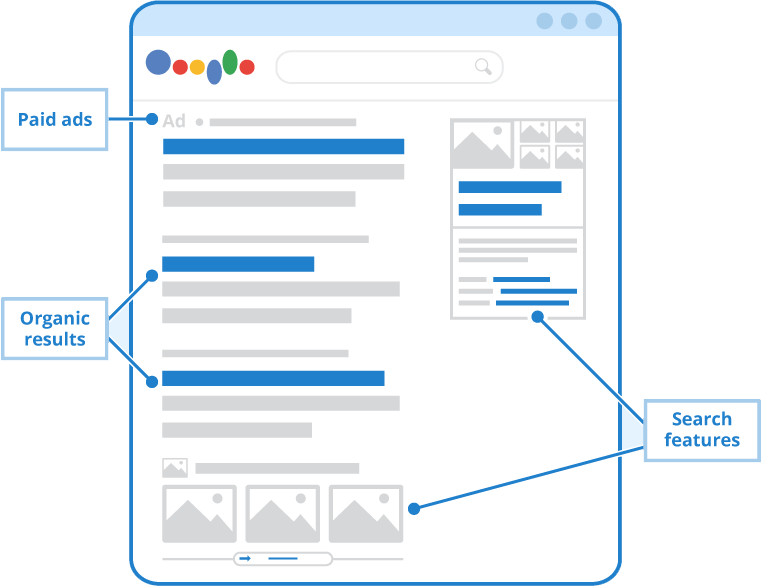
If you only track blue-link rankings in 2026, you’re flying blind. The new discipline includes monitoring citations, answer inclusion, and entity coverage across AI surfaces, not just Google.
I tell every client this now: SEO is a subset of a larger discovery strategy. You need to improve for Google AI Overviews, for ChatGPT search, for voice assistants, and for the growing number of vertical search engines.
What critics get wrong is believing that AI eliminates the need for websites. The opposite is true.
Still, arguably the brands that give that experiential data are the ones cited most, and citation leads to trust, which leads to clicks. When the user is ready to act.
Zooming out a bit, the same principle applies across all fields: AI systems need accurate, well-structured data inputs. Quality SEO makes sure that the inputs AI pulls from are correct, timely, and attributable, and that means ongoing organic content creation isn’t optional.
What should happen next? For marketers, the path is clear but needs letting go, which means you stop treating GEO as an optional add-on and start building it into your workflow from day one. You invest in tracking metrics that matter for AI search; citations, impressions on new surfaces, and entity growth. Which means you accept that SEO and GEO coexist, not compete.
The real threat isn’t AI; it’s marketers who cling to a definition of SEO that stopped working years ago. The winners will treat AI answers as a distribution channel, not a competitor. Curiously, they’ll produce content that AI systems want to cite, and in doing so. So, they’ll attract both citations and clicks when people are ready to act.
- Audit your content for AI citability, Use Screaming Frog’s structured data validator or a similar tool to check which pages lack schema, clear Q&A pairs, and entity signals that AI answer engines need.
- Shift budget to high-intent, experience-based pages, Prioritize commercial and local content where AI summaries cannot replace a full website visit with reviews, pricing, and booking forms.
- Implement schema markup across all key pages, Article, FAQ, HowTo, and LocalBusiness schema, especially in JSON‑LD format, signal to AI models that your content is structured and reference‑ready. A simple FAQ block can make the difference between being cited or skipped.
- Monitor new visibility metrics monthly, Use tools like Semrush’s AI Overviews tracker (if available in beta) or ZipTie.dev to track citations in AI Overviews, Perplexity, and ChatGPT, alongside traditional rankings.
- Build topical authority through entity connections, Claim your organization’s Wikidata entry, connect it to your Google Business Profile, and ensure consistent entity mentions everywhere. This strengthens knowledge graph signals that AI models rely on.
People Also Ask
No. SEO will evolve, but AI can’t replace the core human activities of creating, organizing, and improving information that people look for. Search engines still rely on crawled content, and the act of improving that- okay, more accurately, content makes sure it’s findable, accurate, and useful, a job AI doesn’t eliminate.
SEO focuses on ranking in traditional Google results pages; answer engine optimization focuses on getting your information cited directly in AI-generated answers. The two overlap heavily because both need authority, structure, and relevance. AEO is simply the modern extension of SEO into conversational AI interfaces.
Yes, especially for queries with buying intent, local need, or where each user wants deeper research. AI summaries often handle top-of-funnel questions, but users still click through to compare, purchase, or take action. Those click-through destinations need SEO to be discovered.
Usually three to six months to see meaningful citation growth and improved visibility in AI surfaces, provided you combine content upgrades, schema setup, and authority-building. Easy victories are rare; this is a long-term discipline.
Absolutely. It tells you what people are asking, and that insight drives the topics and entities you should cover to be cited. The difference is you no longer write a separate thin page for every variant; you build complete, authoritative resources.
Tools like Semrush’s AI Overviews tracker (currently in beta), ZipTie.dev, and manual spot-checking in ChatGPT and Perplexity can help you see if your content is being cited. Google Search Console is also expected to introduce AI overviews reporting, so keep an eye on that.
These give you a view of how often your brand appears as a source in generative search results, complementing traditional ranking data.